
Instrument Assisted Soft Tissue Mobilization
£45 / hour
IASTM - Instrument Assisted Soft Tissue Mobilization
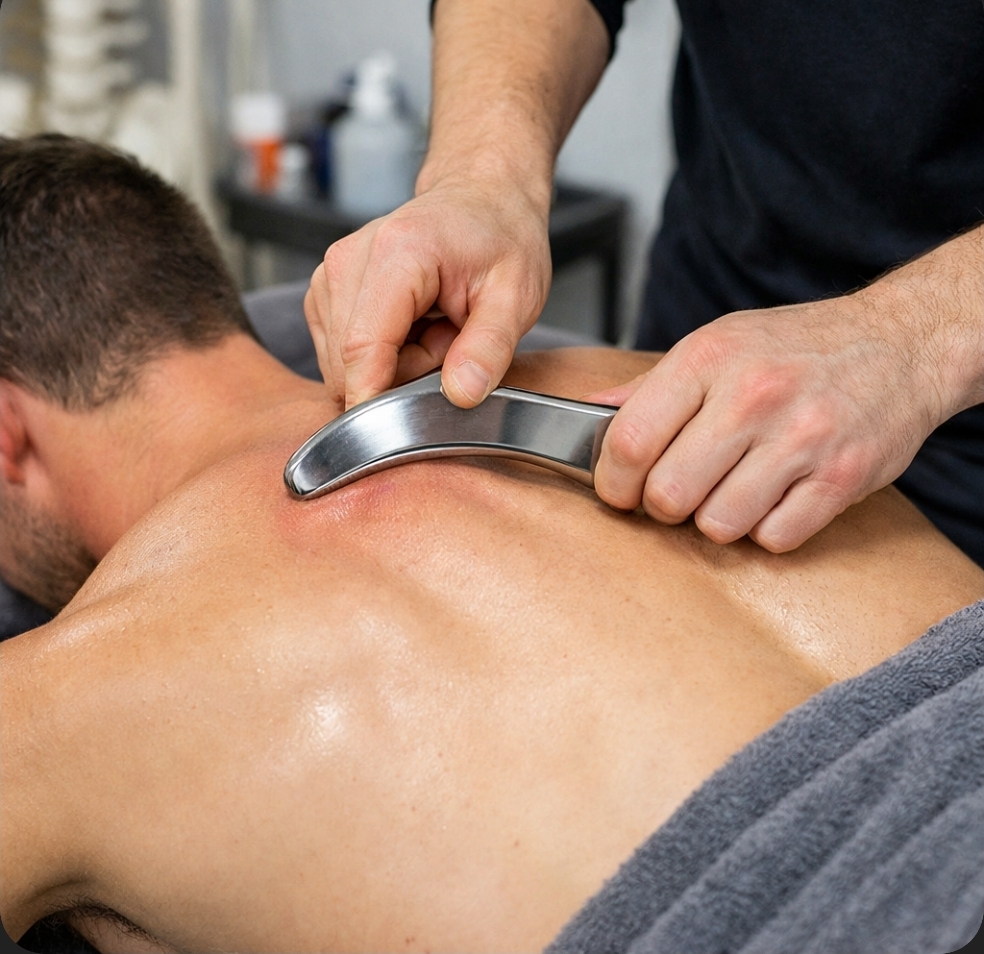
Whether you’re recovering from an injury, managing chronic pain, or looking to improve performance, IASTM could be the missing piece in your recovery or wellness plan. These instruments allow for deeper penetration than hands alone, making treatment more precise and effective. It is used to treat soft tissue injuries, reduce pain and improve mobility. It helps to:
.Break up adhesions and scar tissue
.Stimulate collagen and lymphatic flow
Encourage the body’s natural healing process
IASTM is used to treat :
.Tendonitis (eg tennis elbow, golfer’s elbow)
.Plantarfasciitis
.Shin Splints
.Carpal Tunnel Syndrome
.IT band syndrome
.Neck and back pain
.Muscle Strains and sprains
.Post-surgical or post-injury scar tissue
What is KCR ?
Using specially designed tools made of stainless steel targeted pressure is applied to the skin, helping to break down fascial restrictions and scar tissue. Over time, this can lead to better tissue quality, improved movement and reduced pain. Some redness, mild discomfort or bruising may occur temporarily as this is part of the body’s healing response.
Frequently asked questions
Are you not sure whether IASTM is for you? Maybe we can help with some frequently asked questions.
IASTM should not be painful, though you may feel some discomfort or sensitivity in tight or injured areas. Some redness or mild bruising can occur afterward, which is a normal part of the healing process as circulation increases and the body responds to treatment.
Absolutely. IASTM is often used alongside massage therapy, stretching, exercise rehab, and other physical therapy modalities. This integrative approach helps improve outcomes and speeds up recovery.
While both techniques aim to relieve tension and promote healing, IASTM uses tools to apply targeted pressure and work deeper into the tissue than hands can. It's particularly effective at breaking down scar tissue, improving mobility and stimulating collagen regeneration.
Mild bruising or redness can occur, especially if the area is inflamed or tight. This is a normal response as circulation increases and scar tissue breaks down. Any bruising is typically short lived and part of the body's healing response.
Stay in the loop!
Sign-up to our new letter for the latest news, updates and offers.